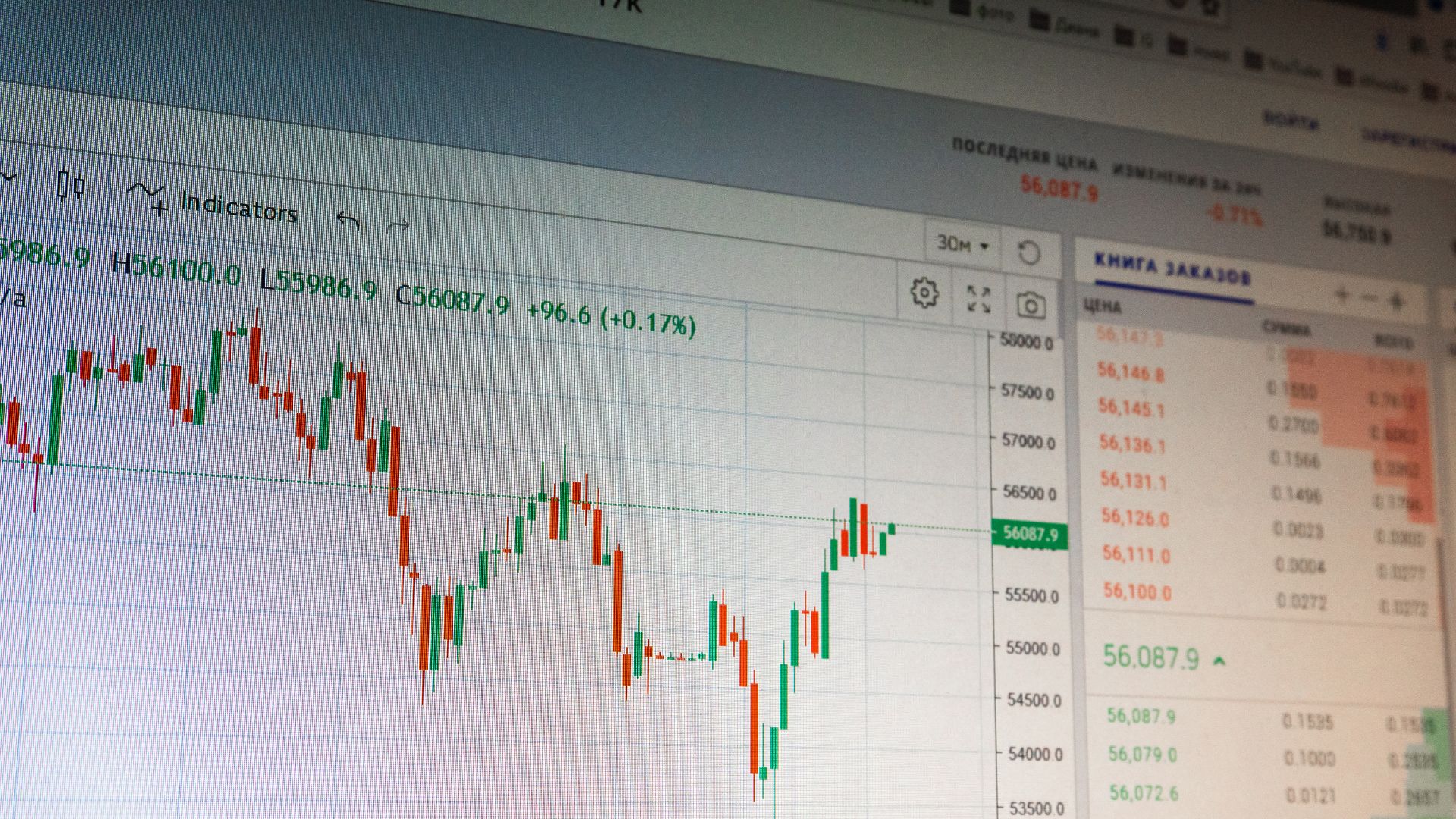
The different roles on a trading floor: understanding the functions and dynamics
The trading floor fascinates as much as it intrigues. Multiple screens, continuous information flows, rapid decisions and significant financial stakes: the environment is demanding and highly technical. Yet behind the sometimes caricatured image of the solitary trader lies a structured organization, where several professions interact permanently.
Understanding the respective roles of the trader, the sales, the structurer or even the analyst makes it possible to better grasp the overall logic of a markets bank.
Read more: Corporate finance and market finance, what differences?
The trader: managing risk and ensuring liquidity
The trader is undoubtedly the most well-known figure. His main role consists of buying and selling financial instruments (equities, bonds, currencies, derivatives, commodities) while managing the associated risk.
Two major categories are generally distinguished:
-
The “flow” trader, who executes client orders and adjusts the bank’s positions.
-
The “prop” (proprietary) trader, historically responsible for taking positions on the bank’s own account — an activity now strongly regulated.
The trader must make rapid decisions, adjust positions according to market movements and comply with strict risk limits. Performance is measured daily through P&L (profit and loss).
The profession requires responsiveness, composure and discipline in risk management.
The sales: the interface between the bank and clients
The sales is the privileged point of contact with institutional investors: investment funds, insurers, hedge funds, corporations.
His role is twofold:
-
Propose investment ideas adapted to the client’s profile.
-
Transmit orders to the trader and ensure transaction follow-up.
The sales must understand financial products, market conditions and the specific constraints of each client. He acts as a strategic intermediary, capable of identifying needs and responding effectively.
The relational dimension is central: trust and the quality of client follow-up largely determine success in this profession.
The structurer: designing tailor-made solutions
The structurer intervenes when client needs go beyond standard products. He designs tailor-made financial products, often in the form of complex derivatives or structured products.
His work consists of:
-
Translating an economic need into a financial solution.
-
Modeling performance scenarios.
-
Collaborating with traders to hedge the risks generated.
The structurer must possess strong quantitative mastery, particularly in financial mathematics. He operates at the interface between technical and commercial functions.
It is a profession that values financial engineering and the ability to innovate.
The analyst (research): producing expertise
Research teams produce macroeconomic, sectoral or security-specific analyses.
One notably distinguishes:
-
Equity research analysts.
-
Credit analysts.
-
Macro analysts.
Their role is to inform client and internal team decisions through research notes, recommendations and valuation models.
Credibility relies on analytical rigor and the relevance of forecasts.
Support functions: an invisible pillar
A trading floor does not operate without key functions such as:
-
Risk management.
-
Middle office.
-
Compliance.
-
Quantitative IT.
These teams ensure compliance with risk limits, validation of transactions and proper functioning of systems.
Although less visible, these functions are essential to ensure the stability and compliance of market activities.
An organization based on interdependence
Contrary to the image of an individualistic universe, the trading floor relies on strong coordination.
A client contacts the sales.
The sales exchanges with the trader.
The structurer potentially designs a specific solution.
Risk management validates the parameters.
The middle office confirms the transaction.
Each link in the chain contributes to overall performance.
What skills are required to succeed?
Profiles differ according to professions:
-
The trader must master stress management and rapid decision-making.
-
The sales excels in communication and client understanding.
-
The structurer combines quantitative rigor and financial creativity.
-
The analyst develops an in-depth and structured analytical ability.
Beyond technical skills, the ability to work as a team and adapt to a volatile environment is decisive.
Conclusion
The trading floor is a complex ecosystem where several complementary expertises coexist. Trader, sales, structurer, analyst: each plays a specific role in the value chain.
For a student interested in market finance, it is essential to understand these differences in order to identify the profession that best matches his or her profile.
Behind the intensity and speed of markets lies above all a structured organization, built on risk management, technical expertise and collective coordination.