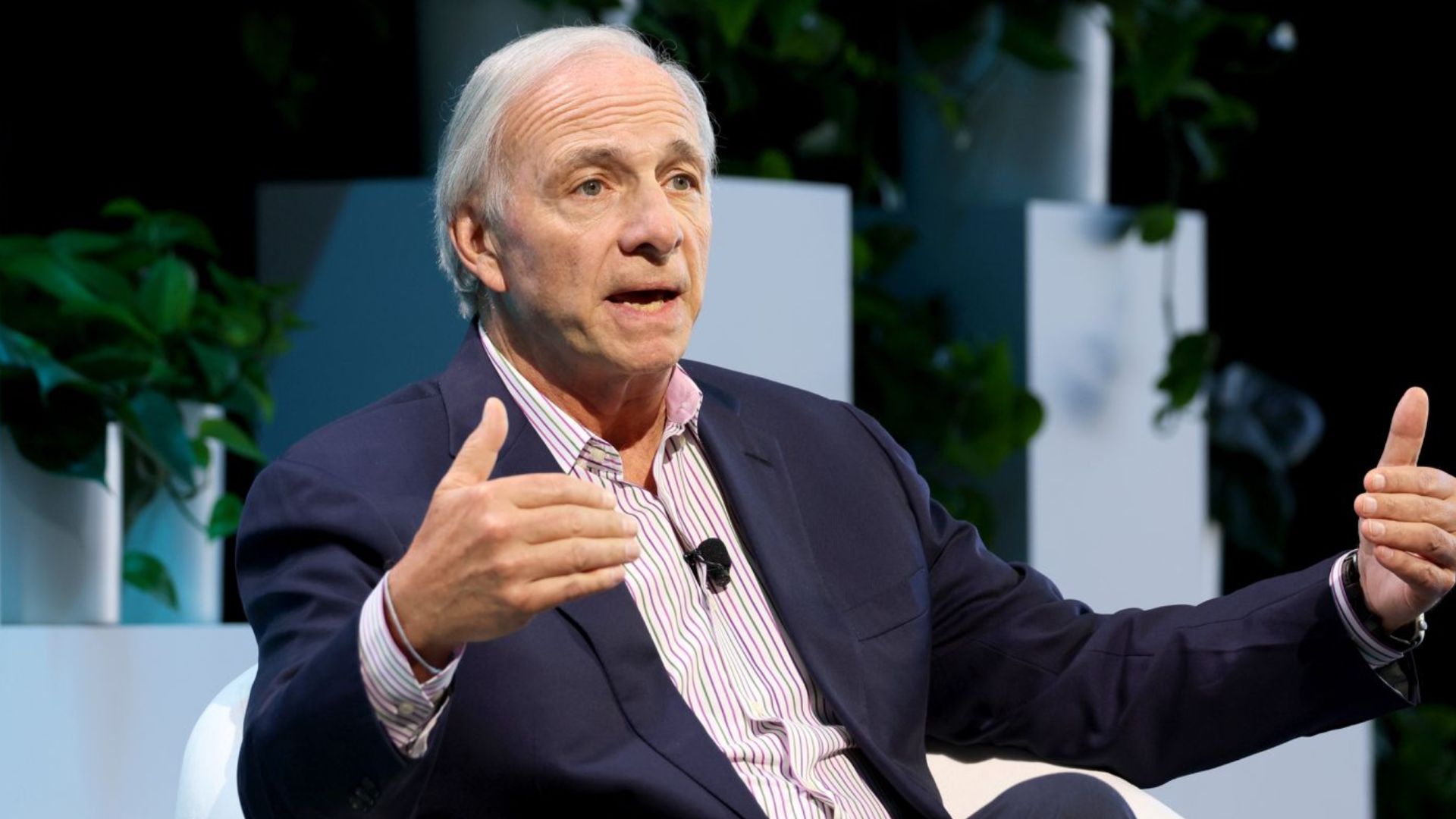
Ray Dalio (Bridgewater): how he built the largest hedge fund in the world
In the world of finance, some names go beyond performance to become true intellectual references. Ray Dalio is part of this category. Founder of Bridgewater Associates, he built one of the most powerful and influential hedge funds in the world.
His journey is not limited to financial success. It embodies a unique way of thinking about markets, risk management, and organizational structure.
Read more: Why are private equity recruitment processes so long and demanding?
Humble beginnings and extraordinary ambition
Ray Dalio started investing at a very young age. As a teenager, he developed a strong interest in financial markets, with a particular curiosity for economic cycles.
After his studies, he founded Bridgewater in 1975, initially from his apartment. At the time, the firm was far from being a financial giant. Dalio worked as an advisor to companies and gradually developed macroeconomic expertise.
The early years were marked by successes, but also by a major failure. In 1982, Dalio anticipated an economic crisis that did not materialize. This mistake led him to lose a large part of his capital and forced him to rebuild almost from scratch.
This episode became foundational. It pushed him to rethink his decision-making process.
Building a unique investment philosophy
One of the key elements of Bridgewater’s success lies in the approach developed by Ray Dalio: a systematic and rigorous vision of markets.
Rather than relying on intuition, he sought to understand fundamental economic mechanisms. He developed a global macro approach based on the analysis of economic cycles, interest rates, inflation, and monetary policies.
This approach led to the creation of emblematic strategies, notably the “All Weather Portfolio,” designed to perform across different economic environments.
The objective is not to predict the future precisely, but to build portfolios that are resilient to uncertainty.
An obsession with risk and diversification
Another pillar of Bridgewater’s success is risk management. Ray Dalio believes that the most common mistake investors make is underestimating risk.
He developed an approach based on diversifying sources of performance. The idea is to combine positions that react differently to economic changes.
This logic helps limit losses during unfavorable periods and stabilize performance over the long term.
Risk management thus becomes a core competitive advantage, far beyond a simple protective tool.
A radically different corporate culture
Beyond investing, Ray Dalio has profoundly influenced the world of finance through his management philosophy.
Bridgewater is known for its culture of “radical transparency.” Employees are encouraged to express their opinions, challenge ideas, and confront different viewpoints.
Decisions are not based on hierarchy, but on the quality of arguments. This approach aims to improve collective decision-making.
While this culture can be demanding and unsettling, it is one of the foundations of the fund’s performance.
The use of data and systems
Bridgewater also stands out for its advanced use of data and systems. Ray Dalio seeks to transform his investment principles into systematic rules.
These rules are then integrated into models that guide decision-making. The objective is to reduce human biases and improve consistency.
This approach partly anticipates the current evolution of finance toward more quantitative and systematic models.
Steady and controlled growth
Unlike some rapid success stories, Bridgewater was built over time. The fund’s growth is based on performance, investor trust, and strategic consistency.
Over time, Bridgewater attracted major institutional investors: pension funds, central banks, and large institutions.
This stable investor base allows the fund to manage significant assets while maintaining a long-term perspective.
A lasting impact on finance
Beyond performance, Ray Dalio has influenced how many investors approach markets.
His work on economic cycles, diversification, and risk management is now widely studied.
He has also contributed to promoting a more structured and analytical approach to investing, as opposed to a purely intuitive one.
What a finance student can learn from it
Ray Dalio’s journey offers several key lessons.
First, the importance of learning from mistakes. The 1982 failure was a major turning point in his career.
Second, the need to develop independent thinking. Dalio did not simply follow existing approaches; he built his own analytical framework.
Finally, his path highlights the importance of discipline, rigor, and consistency. Success in finance does not rely only on brilliant ideas, but on their execution over time.
Conclusion
Ray Dalio did not just build a high-performing hedge fund. He developed a way of thinking about investing, based on understanding economic mechanisms, managing risk, and constant questioning.
Bridgewater embodies this vision: a structure where performance relies as much on ideas as on methodology.
For a finance student, understanding this journey helps go beyond a superficial view of markets and adopt a more structured, critical, and sustainable approach to investing.